.jpg?width=200&height=117&name=OJUK%20logo_m%20bindestrek%20(002).jpg "Oslo jordmor og ultralydklinikk")

Pregnancy Loss Test
Genetic analysis after miscarriage
A miscarriage can be a very difficult experience – both physically and emotionally. Many are left with important questions:
Why did it happen? Could it have been prevented? And what does it mean for future pregnancies?
What is the Pregnancy Loss Test?
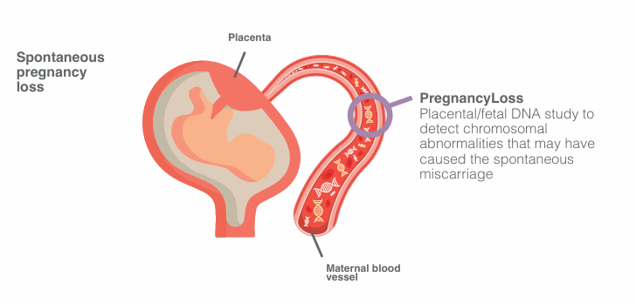
During pregnancy, the placenta releases small amounts of the baby’s DNA into the mother’s bloodstream. This is called cell-free fetal DNA.
The Pregnancy Loss Test analyzes this DNA using advanced genetic technology. In this way, we can assess whether chromosomal abnormalities were present in the fetus that may explain the miscarriage.
If the test detects a chromosomal abnormality, this is most often a random event and the most likely explanation for the miscarriage.
If the test result is normal, it means that no chromosomal abnormalities were identified, and the cause is likely related to other factors. Further evaluation is then considered individually.
The test:
*Is performed with a simple blood sample*Does not require tissue from the miscarriage
*Provides faster results than traditional methods
*Reduces the risk of technical errors that may occur when analyzing miscarriage tissue
What can the test detect?
The test examines:
*Extra chromosomes (trisomies)*Missing chromosomes (monosomies)
*Larger deletions or duplications (loss or extra genetic material)
This includes both common and rare chromosomal abnormalities that may prevent a pregnancy from developing normally.
Who may benefit from the test?
The test is particularly recommended for:
*Women who have experienced two or more miscarriages
*Women with known or suspected genetic predisposition
*Couples who have been trying to conceive for a long time
*Women who want more information even after a first miscarriage
In short: the test can be offered when you want more knowledge in order to move forward.
When should the sample be taken?
Timing is important to ensure a reliable result.
The blood sample should be taken:
*Before a possible curettage (uterine evacuation), or within 4–6 hours after treatment*As early as possible during an ongoing miscarriage (if ultrasound confirms an ongoing intrauterine pregnancy)
DNA from the pregnancy disappears quickly from the mother’s bloodstream after the pregnancy has ended.
What do the results mean?
Results are classified as:
*Normal (low risk)
*Abnormal (high risk)
*Inconclusive – in such cases, the test is not charged
In most cases where a chromosomal abnormality is detected, it represents a random event with a low risk of recurrence. This can provide important reassurance.
In some cases, the finding may raise suspicion of a balanced chromosomal rearrangement in one of the parents. In such situations, genetic counseling may be recommended, and further follow-up is assessed individually.
Limitations of the test
Like all medical tests, this test has certain limitations:
*Validated for singleton pregnancies (not twins)*Does not detect some very rare chromosomal conditions, such as triploidy
*In approximately 4% of cases, there may be insufficient DNA to obtain a result
Why choose the Pregnancy Loss Test?
*Simple and gentle blood test
*Fast turnaround time (4–7 working days)
*More reliable than traditional analysis of miscarriage tissue
*Provides important information for further follow-up
*May offer greater reassurance during a vulnerable time
Practical information
Price: 6,990 NOK including ultrasound
Turnaround time: 4–7 working days
Please contact us to schedule an appointment for this test.
FAQ
What can the Pregnancy Loss Test tell me?

The test can determine whether the miscarriage was caused by a chromosomal abnormality in the fetus. If an abnormality is detected, this is most often a random event and the most likely explanation for the pregnancy loss.
If the test result is normal, it means that no chromosomal abnormalities were identified. In that case, the cause may be related to other factors, and further evaluation is considered individually.
Does an abnormal result mean it will happen again?
In most cases, chromosomal abnormalities leading to miscarriage are random events with a low risk of recurrence. For many, this information can be reassuring.
In some cases, further genetic evaluation may be recommended.
What if the test result is normal?
A normal result means that no chromosomal abnormalities were detected. It does not always provide a specific explanation for why the miscarriage occurred, but it makes a chromosomal cause less likely. Further evaluation, if needed, is based on your medical history and individual situation.
When should the test be performed?
The blood sample should be taken before a possible uterine evacuation (curettage), or within 4–6 hours after treatment. In the case of an ongoing miscarriage, the sample should be taken as early as possible if ultrasound still confirms an ongoing intrauterine pregnancy.
Timing is important because cell-free fetal DNA clears rapidly from the maternal bloodstream after the pregnancy has ended.
How accurate is the test?
The test has high accuracy for detecting chromosomal abnormalities. However, like all medical tests, it has limitations. In approximately 4% of cases, there may be insufficient DNA to obtain a result.
Can this test replace other investigations?
The test can be an important first step in the evaluation after a miscarriage. If a chromosomal abnormality is identified, it may reduce the need for further investigations. If the result is normal, additional evaluation may be considered depending on your individual case.