.jpg?width=200&height=117&name=OJUK%20logo_m%20bindestrek%20(002).jpg "Oslo jordmor og ultralydklinikk")
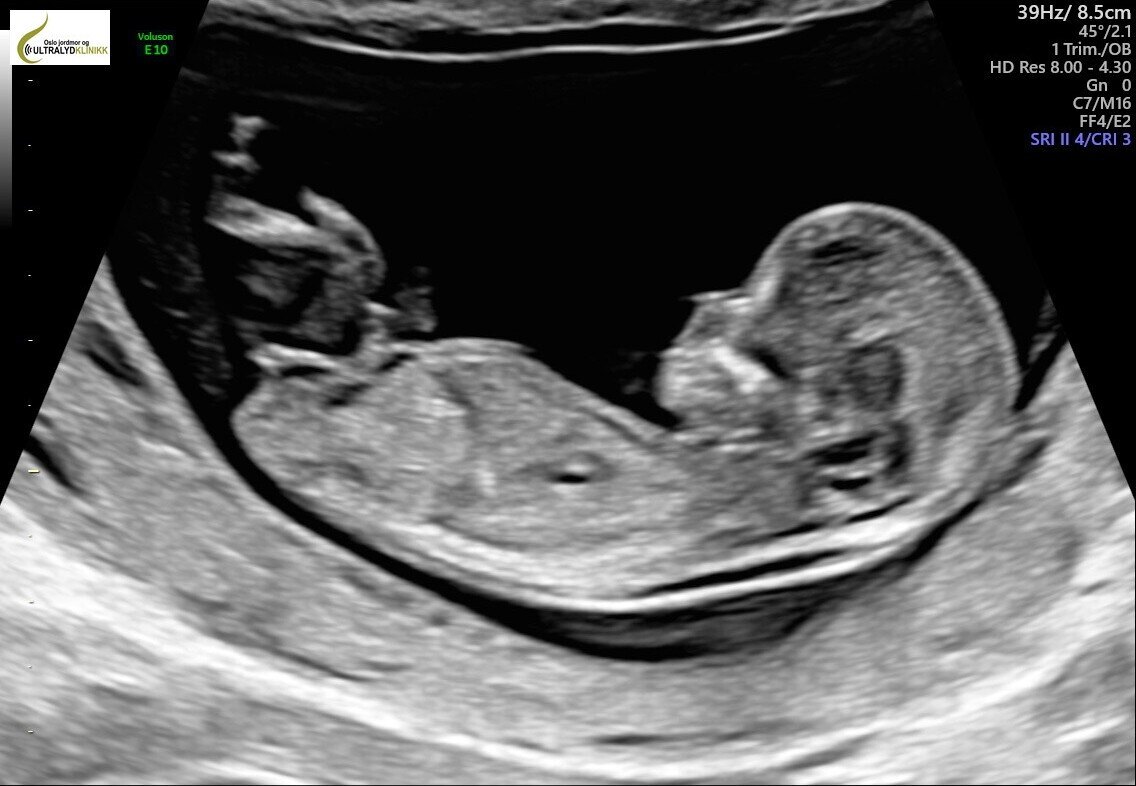
Early ultrasound week 11+2 - 13+6
The risk of miscarriage is now significantly reduced. Most miscarriages occur during the first 12 weeks of pregnancy, and from this point onwards they become less common. By this stage, the major organs have formed, and pregnancy loss before week 12 is most often associated with significant abnormalities in early fetal development.
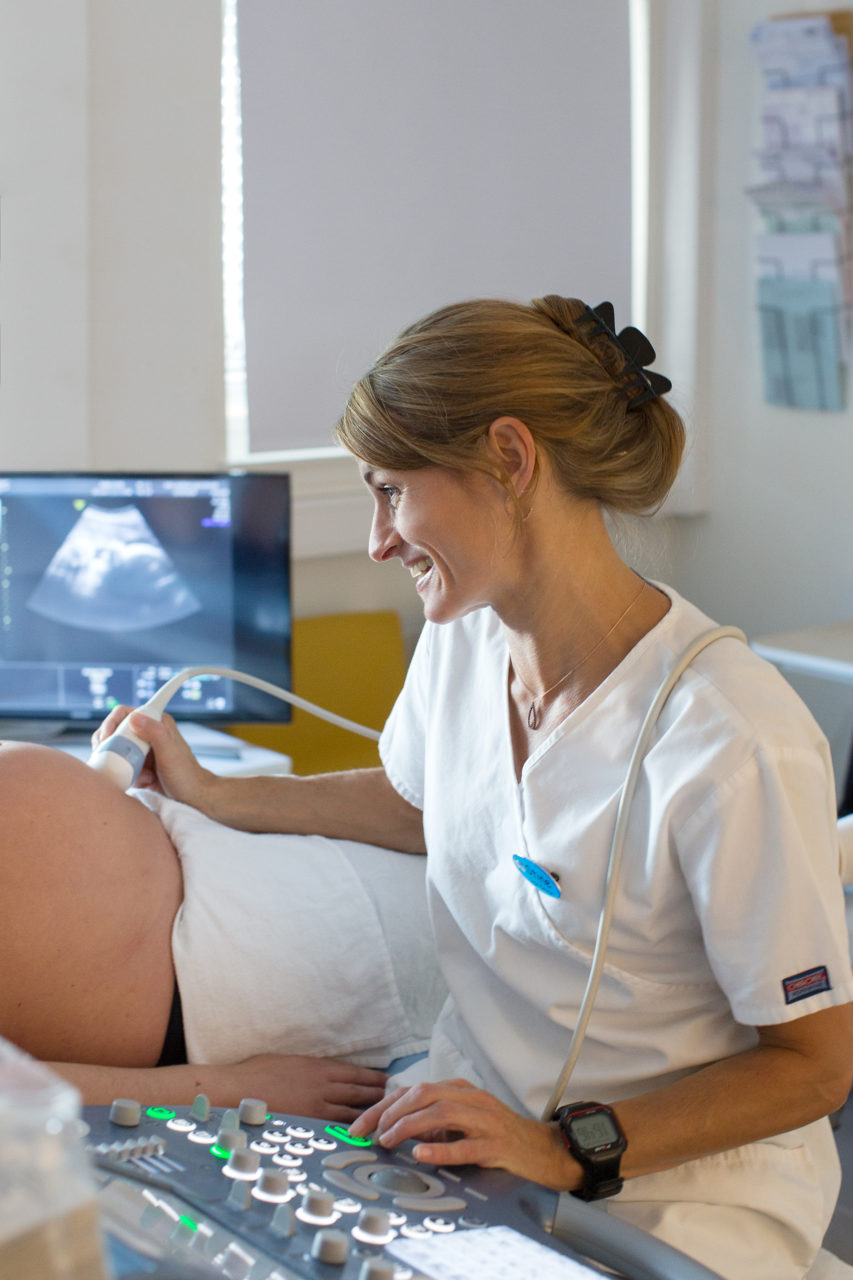
This examination is a prenatal diagnostic ultrasound performed early in pregnancy, from 11+2 to 13+6 weeks of gestation. It is often referred to as an early ultrasound or a first-trimester ultrasound, and includes a thorough assessment of fetal development, anatomy and nuchal translucency.
At our clinic, the examination is performed by certified and experienced ultrasound midwives. We are one of the few clinics in Norway approved by the Norwegian Directorate of Health to perform prenatal diagnostic ultrasound — an approval that requires strict standards for professional competence, clinical routines and quality-assured procedures.
At this stage of pregnancy, the fetus has developed sufficiently for a more detailed assessment to be carried out. We assess, among other things, whether the pregnancy is located in the uterus, the number of fetuses, fetal heart activity and fetal size in order to estimate gestational age. In addition, we assess the fetal body, organ development, nuchal translucency and other markers that may be relevant for further follow-up.
The fetus is still small, but many structures can already be visualised by ultrasound. We can assess the head, cerebral hemispheres, facial profile, arms, legs, stomach, bladder, placental location and amniotic fluid volume. During this period, we can also assess the nuchal translucency and look for the nasal bone, both of which are markers included in early prenatal diagnostic assessment.
Our goal is to provide you with a safe, thorough and clearly explained examination. You will receive information throughout the scan, and we will explain what we are assessing and what any findings may mean. It is important to be aware that an early ultrasound cannot detect all conditions or developmental abnormalities.
Girl or boy?
It can be difficult to see the gender before week 15, but from week 14+0 we can usually see the gender with a high degree of certainty.

Ultrasound weeks 6-7
Before the first 6 completed weeks, the foetus has not developed enough, and we cannot therefore expect to see/hear a heartbeat. Few days play a big role in this context. If you book an appointment before the safe six weeks have passed, the examination might not be able to confirm a heartbeat.
Read more

Ultrasound week 8
This week the brain grows rapidly and the two hemispheres become more distinct. During this week, fingers, toes and elbows begin to form but are difficult to see with a vaginal ultrasound.
Read more
Ultrasound week 11
The overall structure of the brain is now completed. From now on, the brain will further develop specialised structures. However, this does not mean that the brain is fully developed: important substructures in the rough division are not structurally present this early, and it is still a long time before the brain function as it would normally do.
Read more

FAQ
What is ultrasound?

2D (two-dimensional) ultrasound is sound waves that are transmitted from a probe into the body. The sound waves have such a high frequency that they’re inaudible to the human ear.
When the sound waves hit the body tissue, an echo occurs. The echo causes the sound waves to return to the sound head, which captures these sound signals.
After processing on a computer, the incoming audio signals appear as vivid images in black and white on a screen.
Is ultrasound dangerous?
Ultrasounds of pregnant women have been performed for more than 40 years. No adverse effects on women or foetuses have been recorded.
What happens if a missed abortion (MA) is detected at an early ultrasound?
Sometimes it happens that we do not see cardiac activity. This is usually due to a chromosomal abnormality.
We measure the embryo and refer the woman to the hospital she belongs to. Normally she will get an appointment in a few days. There, a gynaecologist will confirm the finding and a surgical or medical abortion will be performed.
The next day we send her a message to check in on her.
In case of suspicion of illness or abnormalities, what happens next?
The midwives who perform ultrasound have completed one year of foetal diagnosis at the National Centre for Emergency Medicine at NTNU. If we see pictures that deviate from the normal we will refer the woman to a maternal-foetal medicine specialist at the National Hospital. She’ll then get an appointment within a few days.
When is ultrasound done internally (vaginal), and on the stomach (abdominal)?
We perform ultrasound vaginally early in the pregnancy, that is, from weeks 6–12. This is because the embryo is so small and the pictures become much clearer on an internal ultrasound.
The woman must lie with her legs in the leg holder with a towel over her. Most people have no problems with this.
Occasionally we also do an internal ultrasound in week 12. This is if the woman has a uterus that is turned slightly backwards or if she’s overweight.
In the case of a 3D ultrasound, the examination is done abdominally.
What kind of ultrasound technology do you use?
We use the Voluson Expert 22 from GE HealthCare – one of the most advanced ultrasound systems available for women’s health and fetal imaging. The system is specifically designed for obstetric and gynecological ultrasound and combines exceptional image quality with modern AI-powered technology for highly precise and detailed examinations.
The machine delivers outstanding 2D, 3D, and 4D imaging, even in challenging scanning conditions, allowing for remarkable clarity and visualization of anatomical details. It is powered by GE HealthCare’s advanced Lyric Architecture technology, which provides faster processing, enhanced contrast, and superior resolution.
The Voluson Expert 22 also includes intelligent AI-assisted features that support more efficient and standardized examinations while improving diagnostic confidence and precision. This allows us to provide ultrasound examinations using state-of-the-art technology — ensuring the highest quality experience and care for our patients.